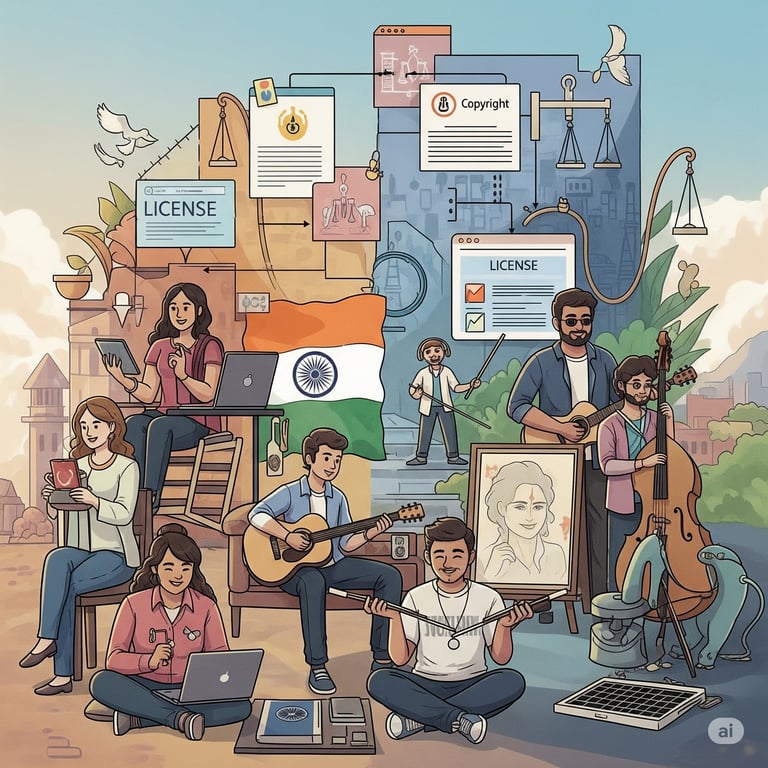
 Every day, thousands of Indian creators remix news clips, memes, and viral footage to entertain, inform, or critique culture. But behind the scenes, outdated copyright laws are punishing them — not protecting them.
From YouTube commentary videos to Instagram Reels that stitch trending moments together, modern internet creativity thrives on reuse and transformation. However, India's copyright framework — rooted in the 1957 Copyright Act — is struggling to keep pace.
As seen in the recent public clash between prominent YouTuber Mohak Mangal and ANI, media agencies are increasingly using copyright strikes to control short clip usage. These strikes come with exorbitant licensing demands and the threat of takedowns. This isn’t an isolated incident — it reveals a deeper systemic issue.
India’s Copyright Law Is Stuck in the Past
The core problem? India’s copyright system was designed for traditional publishers — not digital-native creators.
While the law includes a “fair dealing” clause (akin to “fair use” in the U.S.), it’s narrowly defined — covering only research, criticism, and education. It doesn’t account for remixing, satire, or transformative commentary, which are common practices in digital creation.
This legal blind spot creates real risk:
A 10-second news clip used for critique can lead to takedowns
Memes built on movie dialogues or sound-bites can be struck
Even honest commentary may attract copyright demands
The result? Creators self-censor, avoid remixing, and operate in fear.
Why This Hurts India’s Creator Economy
India has around 5 million digital creators — from influencers and educators to meme artists and indie journalists. Yet many operate in legal ambiguity.
Without safe zones for reuse, innovation is stifled. Expression is limited. Monetization becomes harder.
And unlike legacy media houses, most creators don’t have legal teams or the ability to pay for expensive blanket licenses. In many cases, copyright law is used not to protect original work — but to extract money or silence critique.
What the World Is Doing Better
Globally, creators have more room to breathe:
The U.S. fair use doctrine protects transformative content like parody, commentary, and remix
YouTube’s Content ID allows rights holders to monetize — not just remove — reused content
TikTok’s licensed music catalog encourages creative use of sound
India, however, lacks both clear legal reforms and scalable licensing solutions. There are no easy ways for creators to obtain short-term or micro-licenses. Nor are there widespread educational resources on what counts as “transformative.”
A Roadmap for Reform
India urgently needs to:
Expand fair dealing to cover remixing, commentary, and satire in the digital era
Create a legal framework for micro-licensing — affordable, instant rights for short clips and audio
Encourage structured licensing tools on platforms — not just strike systems
Launch copyright literacy campaigns for creators, agencies, and educators
We need to build the Infrastructure for Modern Creativity
India’s copyright law shouldn’t be a landmine for its creative youth. It should be a launchpad. It’s time for policy, platforms, and products to come together and build an internet where creators are empowered — not penalized.
To collaborate on micro-licensing tech or policy, write to me at og@collabtr.ee, or visit our website: https://collabtr.ee